Main Idea and Details Graphic Organizer PDF: A Comprehensive Plan
Graphic organizers, particularly PDF formats, are vital tools for elementary students learning to discern core concepts. These resources, often paired with Christmas themed passages, aid in identifying the central thought and supporting evidence within nonfiction texts.
Effective practice, utilizing Edraw Template Gallery’s free downloads, builds a foundational skill for reading comprehension and overall academic success.
What is a Main Idea Graphic Organizer?
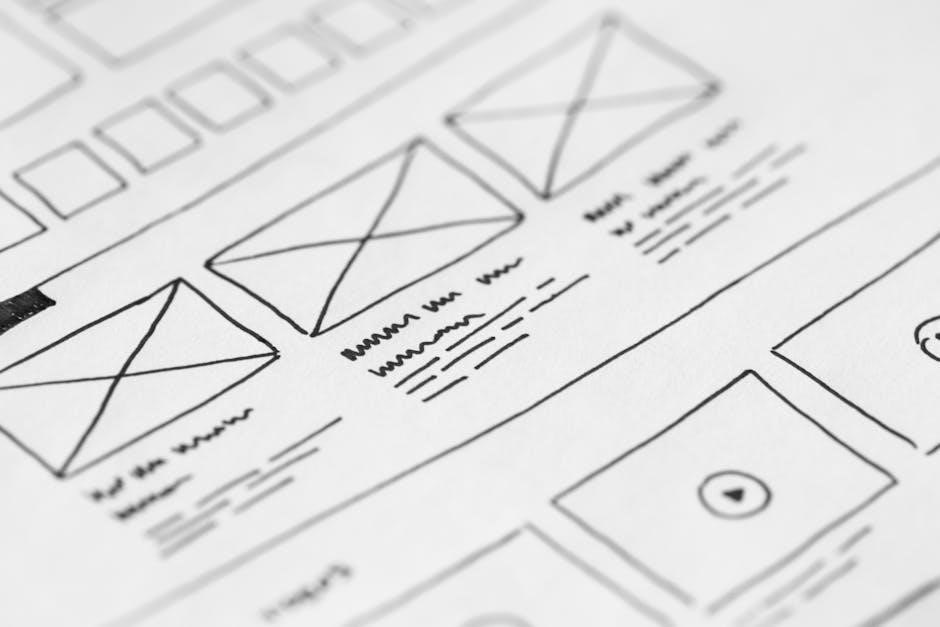
A Main Idea Graphic Organizer is a visual tool designed to help students understand and organize information from a text. It’s a framework, often presented as a PDF for easy access and printing, that guides learners in identifying the central point – the main idea – and the details that support it. These organizers aren’t simply worksheets; they are scaffolding tools that promote active reading and critical thinking.
Typically, a graphic organizer will have a central space for writing the main idea, surrounded by sections or boxes for listing supporting details. This structure encourages students to move beyond simply highlighting text and instead, to synthesize information and determine what’s most important; The visual layout aids comprehension, especially for visual learners, and helps them see the relationship between the main idea and its supporting evidence.
These organizers come in various forms, from simple charts to more complex diagrams. They are particularly useful when working with non-fiction texts, like the Christmas Holiday Non-Fiction Passages, where identifying the author’s purpose and key information is crucial. Ultimately, a main idea graphic organizer empowers students to become more effective and independent readers.
The Importance of Identifying Main Idea and Supporting Details
Identifying the main idea and supporting details is a foundational skill for academic success, extending far beyond simply understanding a single text. It’s the cornerstone of comprehension, critical thinking, and effective learning across all subjects. Without this ability, students struggle to synthesize information, draw conclusions, and retain knowledge.
When students can pinpoint the central message of a passage – whether it’s a Christmas-themed non-fiction article or a complex scientific report – they can better organize their thoughts and connect new information to existing knowledge. Graphic organizers, often available as convenient PDF downloads, provide a structured approach to this process.

Furthermore, recognizing supporting details helps students evaluate the validity of an argument or the credibility of a source. It fosters analytical skills and encourages them to question and explore information rather than passively accepting it. Mastering this skill, through practice with resources like those found in Edraw Template Gallery, empowers students to become active, engaged learners.
Types of Graphic Organizers for Main Idea and Details
Several graphic organizer formats effectively aid students in identifying the main idea and supporting details within a text. One common type is the main idea web, where the central concept is placed in the middle and related details branch outwards. Another popular choice is the concept map, visually illustrating relationships between ideas.
More structured options include the PDF-accessible chart with dedicated sections for the main idea, key details, and even summarizing statements. These charts often feature columns or boxes for organized note-taking. Flowcharts can also be adapted to show the progression of ideas leading to a central theme.
For younger learners, simpler organizers like a “Somebody Wanted But So Then” chart can be incredibly effective. Regardless of the chosen format, the goal remains consistent: to provide a visual framework that helps students deconstruct a text and isolate its core components. Resources like those available through Edraw Template Gallery offer a variety of these templates.
Benefits of Using Graphic Organizers for Elementary Students
Employing graphic organizers, particularly in PDF format, offers significant advantages for elementary students grappling with reading comprehension. These visual tools transform abstract concepts into manageable components, fostering a deeper understanding of the main idea and supporting details. They cater to diverse learning styles, benefiting both visual and kinesthetic learners.
Graphic organizers promote active reading strategies, encouraging students to engage with the text and identify key information. This process enhances critical thinking skills and improves retention. Utilizing themed passages, like those centered around Christmas, increases engagement and makes learning more enjoyable.
Furthermore, these tools support organization and note-taking skills, laying a foundation for future academic success. They are particularly helpful in small intervention groups, allowing teachers to provide targeted support. Accessing free, downloadable templates, such as those from Edraw Template Gallery, makes implementation accessible and cost-effective.
Christmas Holiday Non-Fiction Passages & Graphic Organizers
Integrating Christmas-themed non-fiction passages with corresponding graphic organizers provides a uniquely engaging learning experience for elementary students. These resources transform a familiar and festive topic into an opportunity to master the crucial skill of identifying the main idea and supporting details. The holiday context boosts student motivation and makes learning more relatable.
These passages, often available as PDF downloads, present factual information about Christmas traditions, history, or related scientific concepts. Paired with a well-designed graphic organizer, students can visually map out the central theme and the evidence that supports it. This approach reinforces comprehension and analytical skills.
Such materials are ideal for classroom use, small intervention groups, or independent practice. They offer a structured framework for students to actively engage with the text and demonstrate their understanding. Utilizing illustrated graphic organizers further enhances visual learning and caters to diverse learning preferences, making the process both effective and enjoyable.
Main Idea and Details: A Second Reading Lesson
This lesson, building upon foundational understanding, delves deeper into the process of extracting the main idea and pinpointing crucial supporting details from a text; It’s designed as a continuation, a “second reading” approach, to solidify comprehension skills and refine analytical abilities. Utilizing graphic organizers, often in PDF format, is central to this learning phase.

The objective is to empower students to not only identify the main idea but also to articulate it clearly and concisely. This involves careful re-examination of the text, focusing on key sentences and phrases that contribute to the central theme. The graphic organizer serves as a visual scaffold, guiding students to categorize information effectively.
By the lesson’s conclusion, students should confidently be able to determine the core message of a passage and explain how specific details work together to support that central idea. This skill is paramount for academic success across all disciplines, fostering critical thinking and improved reading comprehension.
Practical Ways to Practice Main Idea and Details
Consistent practice is key to mastering the skill of identifying the main idea and supporting details. Integrating graphic organizers, readily available as PDF downloads, into daily routines offers a structured approach. Begin with short, focused passages – perhaps themed around holidays like Christmas – to build confidence.
Encourage students to actively annotate texts, highlighting key sentences and underlining supporting evidence. Then, guide them to transfer this information onto a graphic organizer, categorizing details logically. Small intervention groups provide a supportive environment for collaborative practice and peer learning.
Beyond worksheets, incorporate real-world texts like news articles or informational pamphlets. Challenge students to summarize these texts, focusing on the central message and its supporting points. Regularly revisiting this skill, with varied materials, ensures long-term retention and application. Remember to utilize resources like Edraw Template Gallery for diverse templates!
Free Downloadable Templates: Edraw Template Gallery
Edraw Template Gallery provides a comprehensive collection of free, downloadable main idea and details graphic organizer PDF templates, catering to diverse learning styles and classroom needs. This online resource simplifies the process of finding suitable organizational tools, saving educators valuable preparation time.

The gallery features a variety of designs, from simple outlines to more visually engaging formats, allowing teachers to select templates that best resonate with their students. These templates are fully customizable, enabling educators to adapt them to specific texts and learning objectives.
Users can easily modify colors, fonts, and layouts to create personalized graphic organizers. Whether you’re focusing on Christmas-themed passages or general nonfiction texts, Edraw offers a template to support effective learning. Explore the gallery today and enhance your instruction with professionally designed, readily accessible resources!

Graphic Organizers vs. Charts, Diagrams, and Figures
While often used interchangeably, graphic organizers, charts, diagrams, and figures serve distinct purposes in visualizing information. A graphic organizer, like a main idea and details PDF template, specifically focuses on structuring thought and relationships – ideal for comprehension tasks.
Charts emphasize data and statistical representation, presenting information in a tabular format. Diagrams, conversely, excel at illustrating relationships and processes, offering a visual explanation of how things connect. A figure is a broader term encompassing any visual representation, including images, illustrations, or graphs.
The key difference lies in their primary function: graphic organizers aid in understanding and organizing ideas, while charts and diagrams present existing information. When teaching main idea, a graphic organizer helps students construct understanding, unlike a chart simply displaying facts. Utilizing the right tool enhances learning and comprehension.

Understanding “Graphic” in Different Contexts
The term “graphic” possesses diverse meanings depending on the context. In relation to graphic organizers, like those found in a main idea and details PDF, it signifies visual representation – a tool for structuring thought through images and layouts.
However, “graphic” also denotes something visually striking or even disturbing, as in “graphic details” in a movie. This highlights the power of visuals to evoke strong reactions. Furthermore, in computing, “graphic” refers to visual elements displayed on a screen, intrinsically linked to GPU (Graphics Processing Unit) technology.
Consider graphic novels – essentially comic books – where storytelling relies heavily on sequential art. The evolution of “graphic” demonstrates its connection to visual communication. Therefore, understanding the nuance of the word is crucial. When discussing graphic organizers, we emphasize their role in visually clarifying information, aiding comprehension of core concepts and details.
GPU and Graphic Processing: A Technical Connection
While seemingly distant from a main idea and details graphic organizer PDF, the concept of graphic processing, powered by GPUs (Graphics Processing Units), underscores the importance of visual information handling. Initially designed solely for rendering images, GPUs have evolved into powerful processors capable of handling complex computations.
The very name, Graphic Processing Unit, reveals its original purpose. However, their capabilities extend far beyond simple visuals. This evolution highlights the increasing demand for efficient processing of visual data – a principle mirrored in the design of effective graphic organizers.
Just as a GPU breaks down complex images into manageable components, a graphic organizer dissects text into its main idea and supporting details. Both aim to simplify and clarify information. AMD Radeon Graphics, for example, demonstrates this processing power. Ultimately, understanding the technical side of graphic processing reinforces the value of visually structured learning tools like those found in PDF formats.
Graphic Realism in Game Design (Marathon Example)
The pursuit of graphic realism in game design, exemplified by the aesthetic analysis of the game Marathon, surprisingly connects to the core principles behind a main idea and details graphic organizer PDF. Marathon’s design philosophy, termed Graphic Realism, prioritized conveying a believable and immersive experience through visual detail.
This focus on detail mirrors the process of identifying supporting details within a text. Just as game designers meticulously craft environments to support the game’s narrative, students using a graphic organizer pinpoint details that support the central idea. Both require discerning what’s essential and how elements contribute to a larger understanding.
The Marathon example demonstrates how carefully chosen visuals can enhance comprehension and engagement. Similarly, a well-designed PDF graphic organizer visually structures information, making it easier for students to grasp the main idea and its supporting components. Both emphasize clarity and a focused presentation of information, fostering deeper understanding.
AMD Radeon Graphics: Integrated vs. Dedicated
The distinction between integrated and dedicated AMD Radeon graphics, while seemingly technical, offers a useful analogy for understanding the role of a main idea and details graphic organizer PDF in learning. Integrated graphics, like those found in AMD’s Zen architecture APUs, share system resources, functioning as a foundational element – much like a student’s initial grasp of a text’s central theme.
Conversely, dedicated graphics possess their own memory and processing power, providing a more focused and powerful experience. This parallels the function of a graphic organizer; it’s a dedicated tool specifically designed to isolate and analyze the main idea and its supporting details.
Just as a dedicated GPU enhances visual clarity, a PDF graphic organizer clarifies textual comprehension. Both provide a structured framework for processing information. The organizer doesn’t create the main idea, but it powerfully reveals it, much like a dedicated graphics card renders a detailed image.
Graphic Novels vs. Traditional Novels: A Comparison
The comparison between graphic novels and traditional novels illuminates the purpose of a main idea and details graphic organizer PDF. Traditional novels rely heavily on textual description, requiring readers to actively construct mental images and infer meaning. This mirrors the challenge of identifying a text’s core message without a structured aid.
Graphic novels, conversely, present information visually, with illustrations directly conveying aspects of the narrative. This is akin to a completed graphic organizer – the main idea and supporting details are visually represented and readily accessible.
However, both formats require comprehension. A graphic organizer PDF serves as a bridge, helping students extract the main idea from even dense textual passages, much like a graphic novel visually supports understanding. Both mediums tell stories; the organizer simply provides a framework for deconstructing a story’s core components and understanding its underlying message.
Ultimately, both formats demand analytical skills, and the organizer is a tool to hone those skills.
The Role of Visuals in Graphic Organizers
Visuals are paramount within a main idea and details graphic organizer PDF, transforming abstract concepts into digestible information. Just as graphic novels utilize illustrations to convey narrative elements, these organizers employ shapes, lines, and images to represent relationships between ideas.
The visual structure isn’t merely aesthetic; it’s functional. Boxes for the main idea, branching lines for supporting details – these elements create a visual hierarchy, guiding students through the text’s structure. This is especially crucial for elementary learners who benefit from concrete representations.
Consider the connection to GPU technology; graphics processing enhances visual clarity. Similarly, a well-designed organizer clarifies textual information. The visual layout aids recall and comprehension, mirroring how Marathon game design used “Graphic Realism” to enhance immersion.
Effectively, visuals in these organizers act as scaffolding, supporting students as they learn to independently identify and articulate a text’s central theme and its supporting evidence. They make the process less daunting and more engaging.
Using Graphic Organizers in Small Intervention Groups
Graphic organizers, particularly main idea and details PDF versions, are exceptionally effective within small intervention groups. This focused setting allows for targeted instruction and individualized support, addressing specific student needs in reading comprehension.
Utilizing resources like Christmas Holiday Non-Fiction Passages alongside the organizers provides engaging, seasonal content. Teachers can observe students’ thought processes as they complete the organizer, offering immediate feedback and clarifying misconceptions;
The collaborative nature of small groups fosters peer learning. Students can discuss their interpretations of the main idea and supporting details, refining their understanding through dialogue. This mirrors the benefits of analyzing a complex work like the Marathon game’s aesthetic, discussing interpretations.
These groups are ideal for differentiated instruction. Students requiring more scaffolding can receive a partially completed organizer, while others can work independently. This targeted approach maximizes learning outcomes, building confidence and skill.
Ultimately, small group intervention with graphic organizers provides a supportive environment for mastering this foundational ELA skill.
Resources for Finding Main Idea and Details Graphic Organizer PDFs
Locating high-quality main idea and details graphic organizer PDFs is now remarkably accessible thanks to a wealth of online resources. A prime starting point is the Edraw Template Gallery, offering a diverse collection of customizable templates suitable for various grade levels and learning styles.
Numerous educational websites and teacher blogs also provide free downloadable resources. A simple online search using keywords like “main idea graphic organizer PDF” yields a plethora of options, including those designed around specific themes like Christmas holidays, enhancing student engagement.
Platforms like Teachers Pay Teachers host a wide array of both free and paid graphic organizers, often created by experienced educators. These resources frequently include accompanying non-fiction passages, streamlining lesson preparation.

Don’t overlook educational publishers’ websites, which often offer sample graphic organizers as part of their curriculum materials. YouTube channels dedicated to reading and writing instruction frequently link to useful PDF resources in their video descriptions.
Remember to preview any downloaded resource to ensure it aligns with your students’ needs and learning objectives.